


The ITUC-Asia Pacific is gravely concerned by the worsening crisis of overwork facing Korea’s courier workers. Recent discussions during the 11th UNI Apro East Asia Trade Unions Forum in Jeju, together with testimonies presented at the 14 November public briefing in Seoul, reveal a logistics system built on excessive overnight labour and structurally unsafe workloads. This crisis is intensified by corporate attempts and some conservative media narratives to undermine workers’ legitimate demands for basic health protections.
Courier services expanded rapidly during and after the Covid-19 pandemic, reshaping public expectations of delivery convenience. But this transformation has come at a severe human cost. Companies competing for ever-shorter delivery times, including industry giants such as Coupang, have normalised all-night operations, holiday deliveries, and a seven-day work cycle. These practices have entrenched a relentless pace that workers describe as physically punishing and psychologically exhausting.
ITUC-Asia Pacific’s affiliate, Korean Confederation of Trade Unions (KCTU), has proposed a restriction on deliveries between 00:00 and 05:00, not a complete ban on dawn delivery. Workers explicitly support maintaining a 5:00 a.m. shift for essential early-morning deliveries. Their proposal seeks only the minimum safety measure needed to prevent overwork deaths, while still ensuring public convenience. Attempts by conservative media to portray this as a “blanket ban” are deliberate distortions that obscure the real issue: workers’ right to health and life.
“What is unfolding in Korea is not an isolated workplace issue. It is a systemic failure driven by business models that treat workers as expendable resources in an endless race for profit,” Shoya Yoshida, General Secretary of ITUC-Asia Pacific, said.
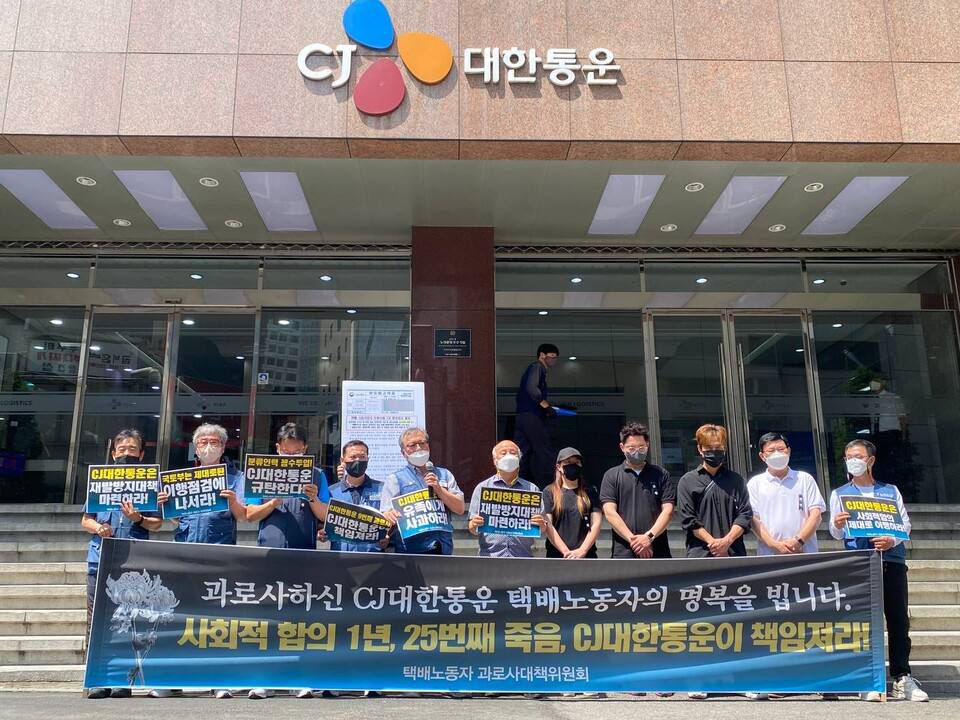
Scientific evidence shows that chronic night work is dangerous. The International Agency for Research on Cancer (IARC) classifies night-shift work as probably carcinogenic to humans. Meanwhile, studies from the Korea Disease Control and Prevention Agency show that working more than 11 hours a day increases the risk of acute myocardial infarction by 1.63 times. Relatedly, the Korea Occupational Safety and Health Agency, the National Institute of Occupational Safety and Health (US), and the Health and Safety Executive (UK) all recommend avoiding continuous night shifts beyond 2-3 consecutive days.
Coupang’s dawn-delivery model, requiring 5-6 consecutive nights of work from 8:30 p.m. to 7:00 a.m., ignores overwhelming medical and occupational-health findings that prolonged night work is hazardous and should not be performed for consecutive days. The death of Coupang courier Jeong Seul-gi, recognised as an occupational disease aggravated by deadline pressure, is a tragic example of the consequences.
The ITUC-Asia Pacific echoes the condemnation by the KCTU and its affiliate, Korean Federation of Service Workers’ Union (KFSU), of the courier industry’s business model of putting profit and delivery speed above workers’ health and safety. It also supports the demands of KCTU and KFSU to: restrict late-night delivery; end delivery-speed-based competition among courier companies; establish concrete measures to reduce overwork; and protect workers’ right to occupational safety and health by regulating night work and delivery deadlines that drive excessive work.
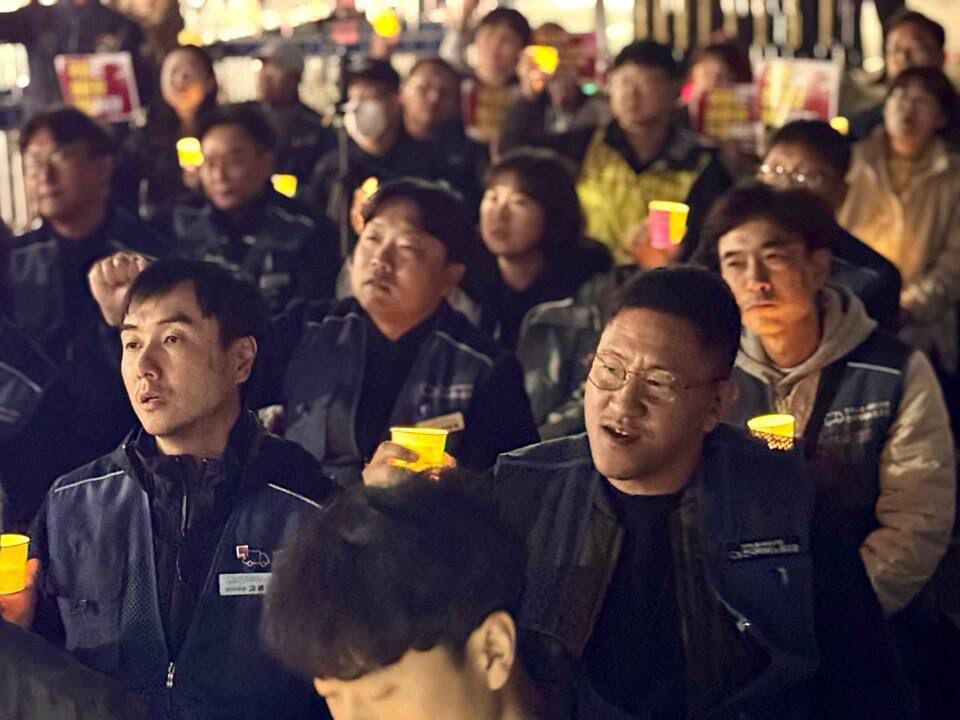
The Korean experience reflects a wider regional trend in which rapid e-commerce expansion relies on precarious labour practices hidden from public view.
Shoya Yoshida said:
“The crisis facing courier workers in Korea exposes a brutal truth: what companies celebrate as efficiency is often built at the expense of workers’ health and safety. We stand firmly with KCTU and KFSU in demanding immediate protection for courier workers. No convenience or profit can justify risking workers’ lives.”

%20(1).jpg)
.jpg)








.jpg)

.png)




.png)


.png)


%20(1).png)


.jpg)


.png)


%201.svg)


