


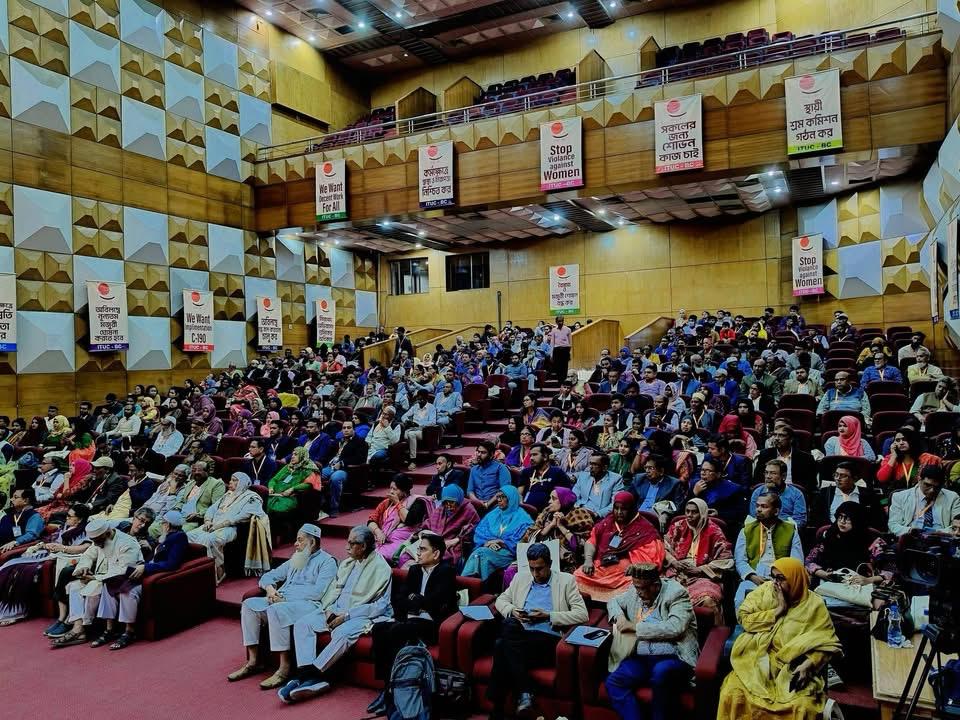
The 6th Global Conference on the Elimination of Child Labour, held from 11 to 13 February 2026 in Marrakech, Morocco, concluded with the adoption of the Marrakech Global Framework for Action Against Child Labour, reinforcing the central role of decent work, living wages and social dialogue in preventing child labour.
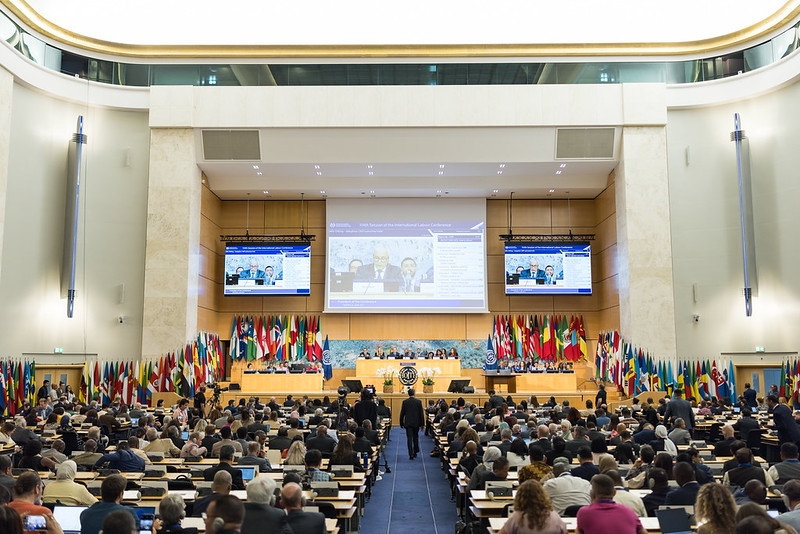
The conference brought together governments, employers, workers and civil society, with 138 workers’ representatives participating to ensure that the outcome reflects the structural realities that continue to drive child labour globally.
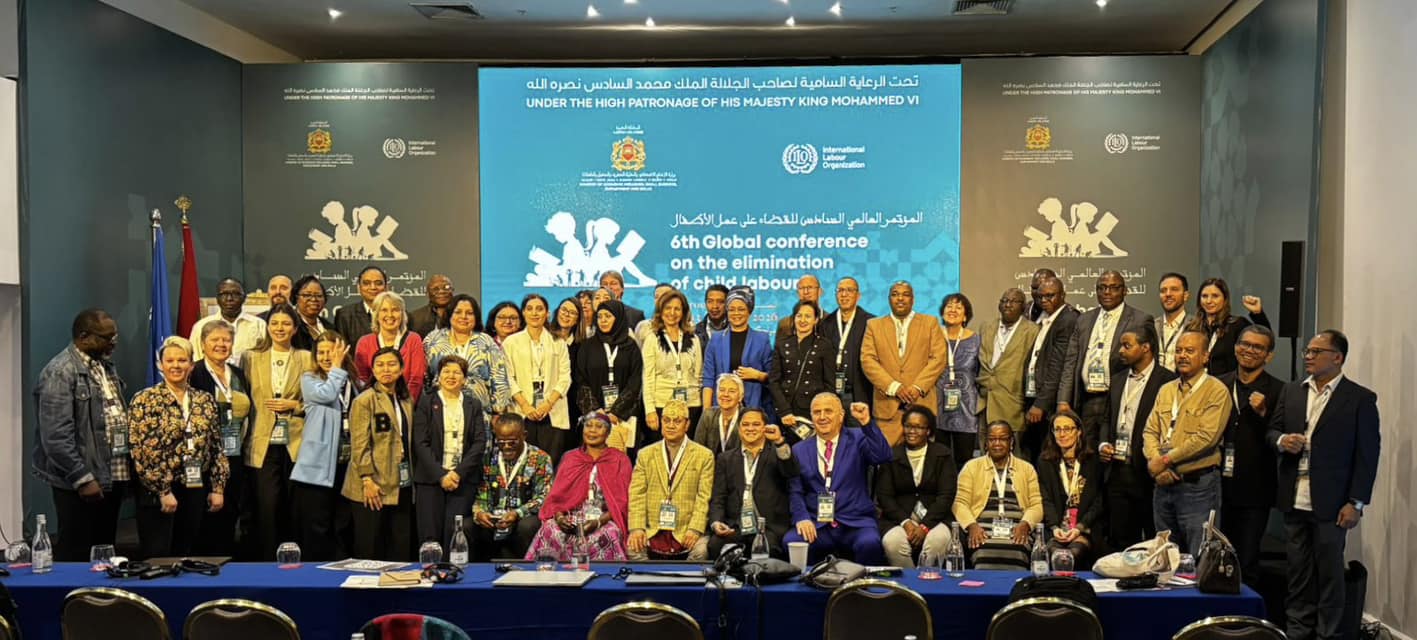
Throughout the negotiations, workers’ representatives stressed that child labour is not an isolated issue, but a consequence of deeper economic and social conditions. Trade unions consistently highlighted that poverty wages, widespread informality, denial of fundamental rights at work, weak labour inspection systems and inadequate social protection create the conditions that push children into work.
Workers’ representatives played an active role in the Tripartite Drafting Committee, with negotiations extending late into the night. The final framework strengthens the recognition of freedom of association and collective bargaining as essential tools for preventing child labour, and acknowledges the need to progressively move from minimum wages toward living wages.
The framework also reinforces the importance of universal social protection systems in addressing the economic vulnerability faced by families. In addition, it introduces stronger monitoring and oversight mechanisms under the International Labour Organization (ILO) Governing Body, marking an important step towards ensuring measurable progress in the global fight against child labour.
Speaking at the session titled Building more effective due diligence systems to tackle the root causes of child labour in supply chains, Dr S M Fahimuddin Pasha, Director for Workers’ Rights, emphasised that child labour is fundamentally an economic outcome of poverty wages and weak protection systems.
He stressed that trade and human rights due diligence frameworks must be firmly connected to workers on the ground through freedom of association and collective bargaining in order to produce real and sustainable results. He also highlighted the need for policy coherence, noting that declining adult incomes increase household vulnerability and heighten the risk of child labour across global supply chains.
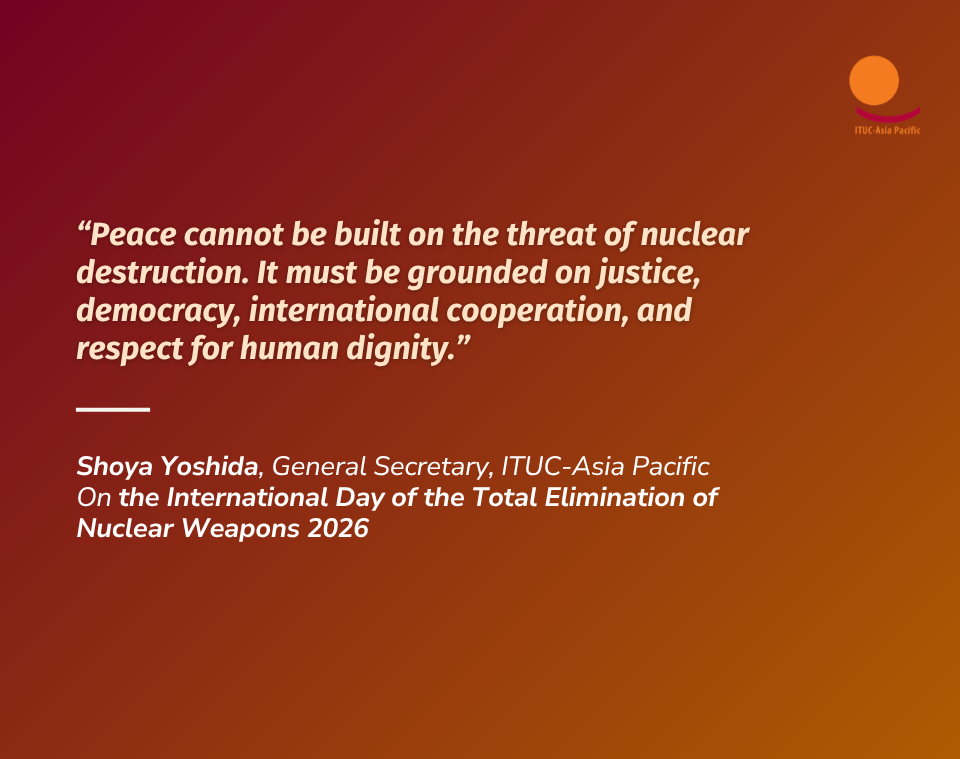
Shoya Yoshida, General Secretary of ITUC-Asia Pacific, underscored the importance of translating commitments into concrete action:
“Child labour will not end through declarations alone. It will end when adult workers earn living wages, when social protection reaches every family, and when they can freely organise and bargain collectively. The Marrakech Framework reflects stronger recognition of these structural solutions. Implementation must now be the priority.”

Compared with the Durban Call to Action, the newly adopted Marrakech Framework provides clearer recognition of living wages, the formalisation of the informal economy and strengthened social dialogue as key pathways to preventing child labour. These developments reflect sustained trade union engagement and growing recognition that decent work for adults is central to eliminating child labour.
The ITUC-Asia Pacific reaffirmed their commitment to working with affiliates across the region to ensure that every child is in school, not at work, and that every worker enjoys rights, fair wages and social protection.


%20(1).jpg)
.jpg)




.jpg)

.png)



.png)


.png)


%20(1).png)


.jpg)


.png)


%201.svg)


