


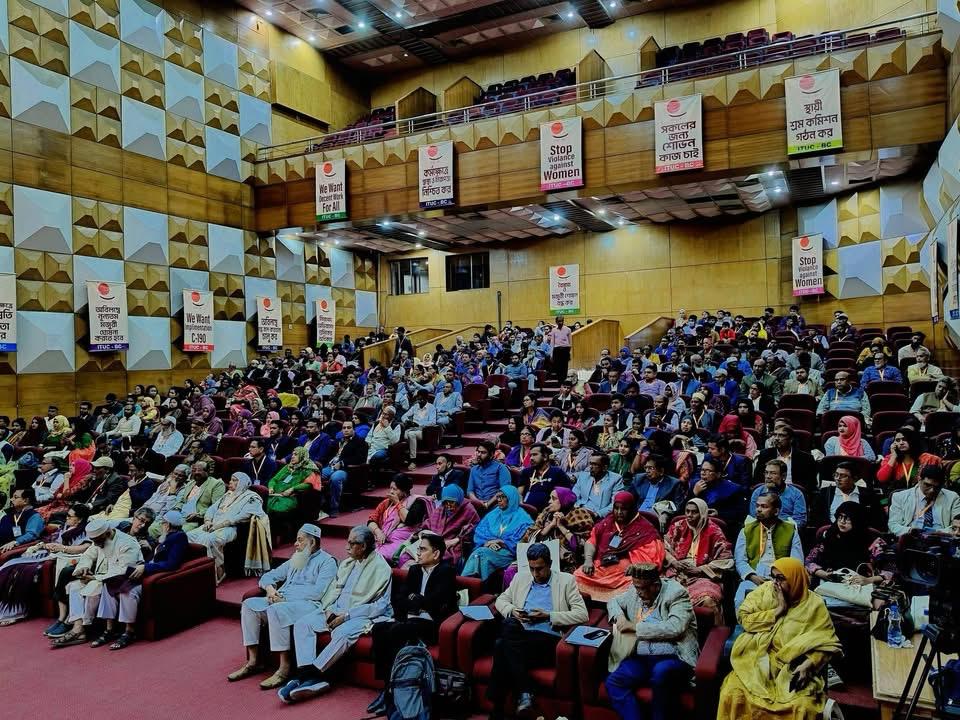
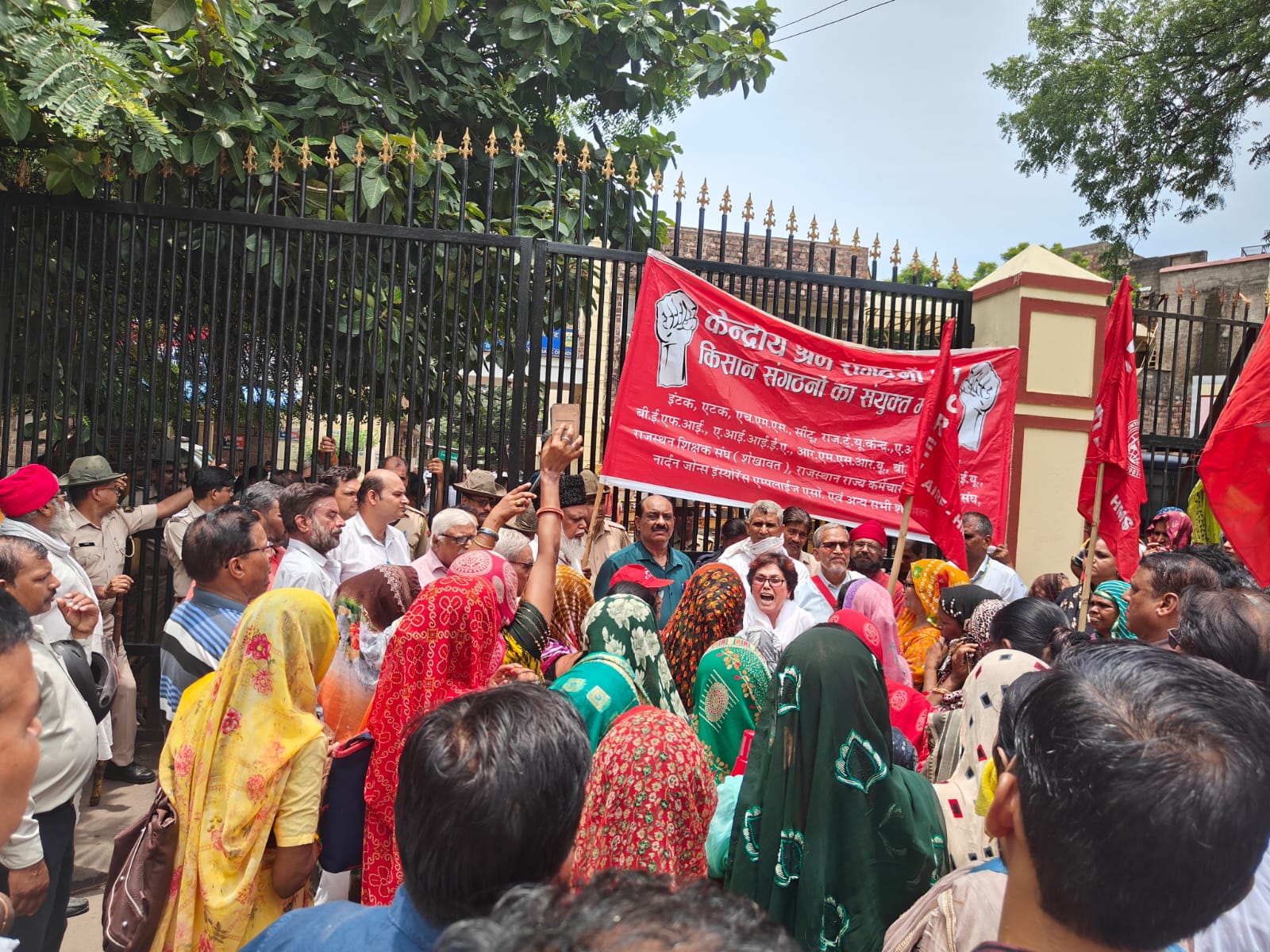
Representatives of India’s trade unions and farmers’ organisations gathered at Talkatora Stadium in New Delhi on 29 July 2026 for the National Convention of Workers and Farmers, held amid the continued deterioration of workers’ and farmers’ working and living conditions since their first joint Convention in 2023.
Gathering around 5,000 workers and farmers at Talkatora Stadium, the Convention adopted a joint declaration reaffirming their commitment to intensify their independent and joint struggles against the anti-people, pro-corporate government of India. It also announced the nationwide decentralised action on 10 August in observance of the Quit India movement, with workplace actions, rallies, human chains and other peaceful demonstrations will be organised across India.
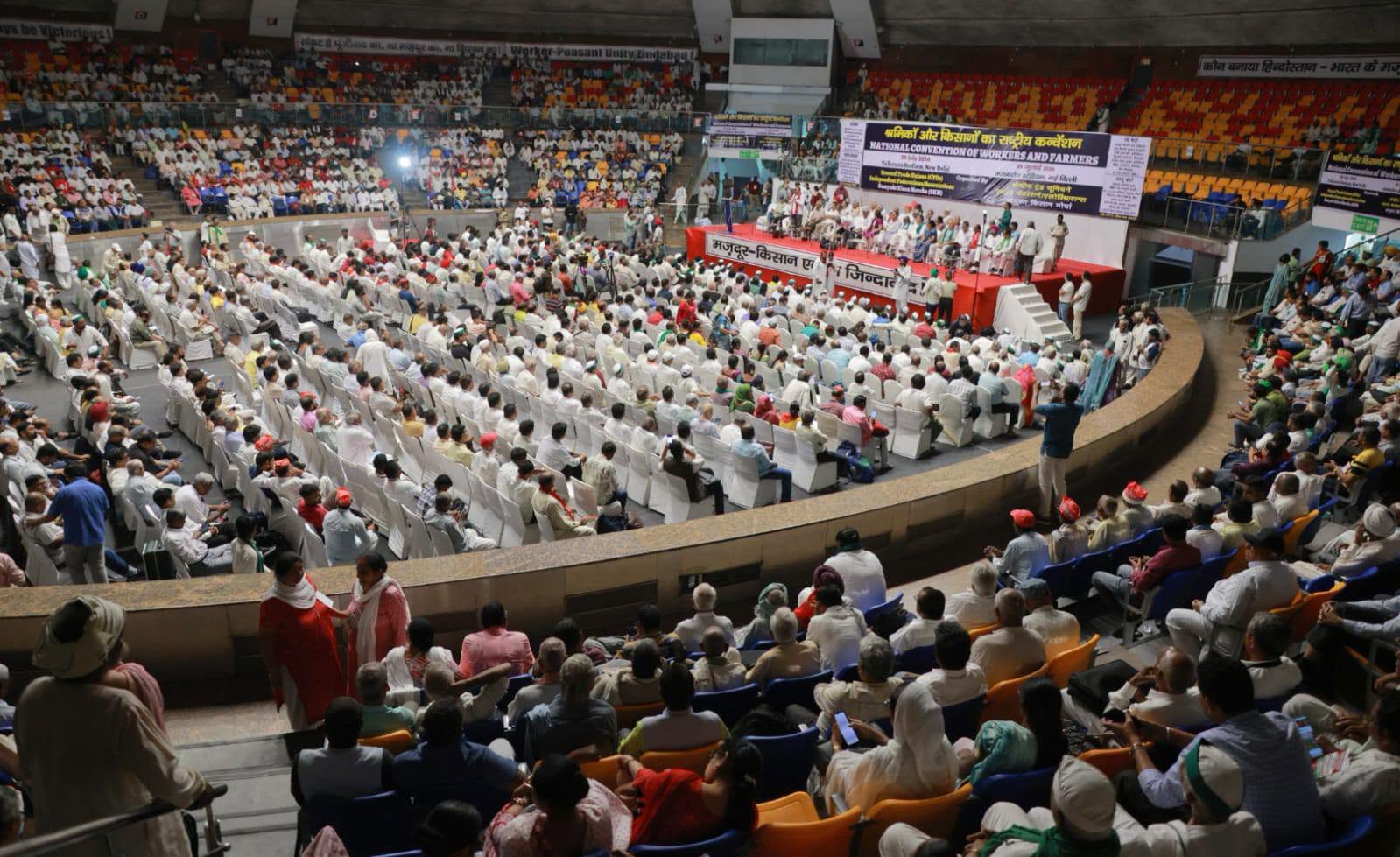
Participants raised serious concerns over unemployment, informal and precarious work, weakening social protection, restrictions on freedom of association and collective bargaining, the implementation of the four Labour Codes, and the privatisation and disinvestment of public enterprises and essential services.
The Convention also warned that India’s proposed trade agreements with the United States and the European Union could harm agriculture, rural livelihoods, domestic production and small enterprises if negotiated without meaningful consultation with workers’ and farmers’ organisations.

In this regard, the joint declaration called for the repeal of the Labour Codes, stronger protection of trade union rights, universal social protection, legally guaranteed remunerative prices for agricultural produce, expanded rural and urban employment guarantees, and greater public investment in education, healthcare, housing and essential services. Participants also demanded an end to the privatisation, outsourcing and contractualisation of public services.
Expressing the solidarity of the regional trade union movement, ITUC-Asia Pacific General Secretary Shoya Yoshida said:
“The powerful unity demonstrated by workers, farmers, agricultural labourers, women and young people sends a clear message that economic development cannot be pursued at the expense of fundamental rights, decent work and sustainable livelihoods. Trade and economic policies must be shaped through meaningful social dialogue and democratic consultation and must deliver social justice for working people.”
Happening after the recent massive student protests over the National Eligibility cum Entrance Test (NEET) paper leak, the Convention also expressed solidarity with students and young people and recognised the Gen Z movement’s mobilisation as a demonstration of the power of organised, peaceful and democratic collective action.

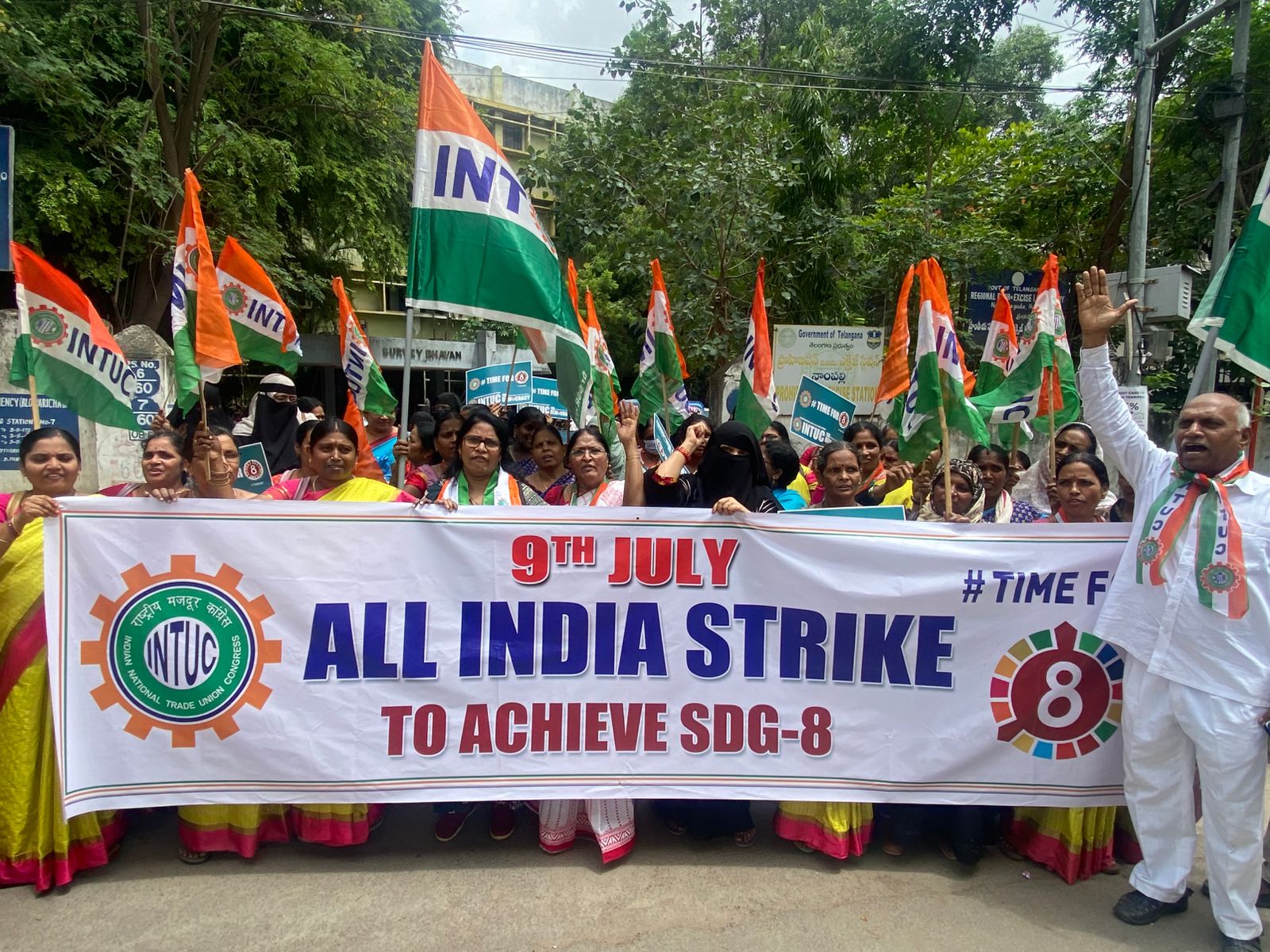
The Convention was jointly organised by India’s Central Trade Unions, sectoral federations and associations, and the Samyukta Kisan Morcha. ITUC-Asia Pacific affiliates — the Indian National Trade Union Congress, Hind Mazdoor Sabha and the Self-Employed Women’s Association, which collectively represent around 50 million workers — played an important role in the mobilisation and proceedings.
Trade unions and farmers’ organisations warned that they will hold joint state-level conventions and prepare further coordinated nationwide action if their demands are not addressed.

.jpg)










.jpg)


.png)




.png)


.png)


%20(1).png)


.jpg)


.png)


.png)


%201.svg)


