


On this International Day for the Total Elimination of Nuclear Weapons, the ITUC-Asia Pacific renews its unequivocal call for the complete abolition of nuclear weapons and for a global security system founded on human dignity, justice, dialogue, and international cooperation.
Across the world, conflicts, wars, and geopolitical tensions are escalating, causing immense human suffering and destroying jobs, livelihoods, communities and hope for the future. At the same time, the threat posed by nuclear weapons is growing. Nuclear threats are being invoked more openly, while military strength and strategic superiority are increasingly prioritised over diplomacy, international law, and multilateral cooperation.
Security built on the capacity to annihilate humanity is not genuine security. Nuclear deterrence asks every generation to live under the shadow of catastrophe. It does not eliminate insecurity; it institutionalises fear and fuels further military competition.
The failure of the 2026 Review Conference of the Treaty on the Non-Proliferation of Nuclear Weapons (NPT) to adopt an outcome document was therefore profoundly disappointing. It marked the third consecutive NPT Review Conference to end without meaningful consensus towards nuclear disarmament.
The NPT remains indispensable in the global nuclear disarmament and non-proliferation regime. Yet its weaknesses and limitations have become increasingly evident. It divides the world between states recognised as possessing nuclear weapons and those prohibited from acquiring them. Its disarmament obligation under Article VI has no clear deadline, while decision-making by consensus allows a small number of states to block progress. Above all, nuclear-armed states continue to modernise and expand their arsenals while expecting other countries permanently to renounce nuclear weapons. This imbalance erodes trust and weakens the legitimacy of the international non-proliferation regime.
The Treaty on the Prohibition of Nuclear Weapons (TPNW) provides a more direct, comprehensive, and equitable response. It prohibits the development, testing, production, possession, transfer, use and threat of use of nuclear weapons. It rejects nuclear weapons for all states without exception and recognises their catastrophic humanitarian and environmental consequences. It also requires assistance for victims and measures to remediate contaminated environments.
The TPNW does not undermine the NPT. It reinforces the NPT’s disarmament commitment by translating it into clear and universal prohibitions and by establishing a pathway towards the verifiable and irreversible elimination of nuclear weapons. The two treaties should be advanced together, as the TPNW provides what has long been missing: an unequivocal legal and moral rejection of nuclear weapons themselves.
The First Review Conference of the TPNW, to be held at the United Nations Headquarters in New York from 30 November to 4 December 2026, is therefore an important opportunity to strengthen implementation of the Treaty, accelerate its universalisation, and agree on concrete steps towards the elimination of nuclear arsenals. It should advance effective arrangements for verification, victim assistance and environmental remediation, while ensuring the meaningful participation of Hibakusha, nuclear-test survivors, affected communities, Indigenous Peoples, workers, trade unions, and civil society.
States that have not yet joined the TPNW, including nuclear-armed states and those relying on nuclear deterrence arrangements, should attend the Review Conference even as observers and engage seriously and constructively with States Parties, nuclear weapons survivors, and affected communities. . At a time of deepening international division, refusing even to engage in dialogue would only reinforce mistrust and diplomatic paralysis.
The Conference must send a clear message to nuclear-armed states and those relying on nuclear deterrence: refusing to join the TPNW does not make nuclear weapons legitimate, acceptable or safe. Even before all nuclear-armed states become parties, the Treaty is changing international norms by exposing the unacceptable humanitarian consequences of these weapons and delegitimising their possession, use and threat of use.
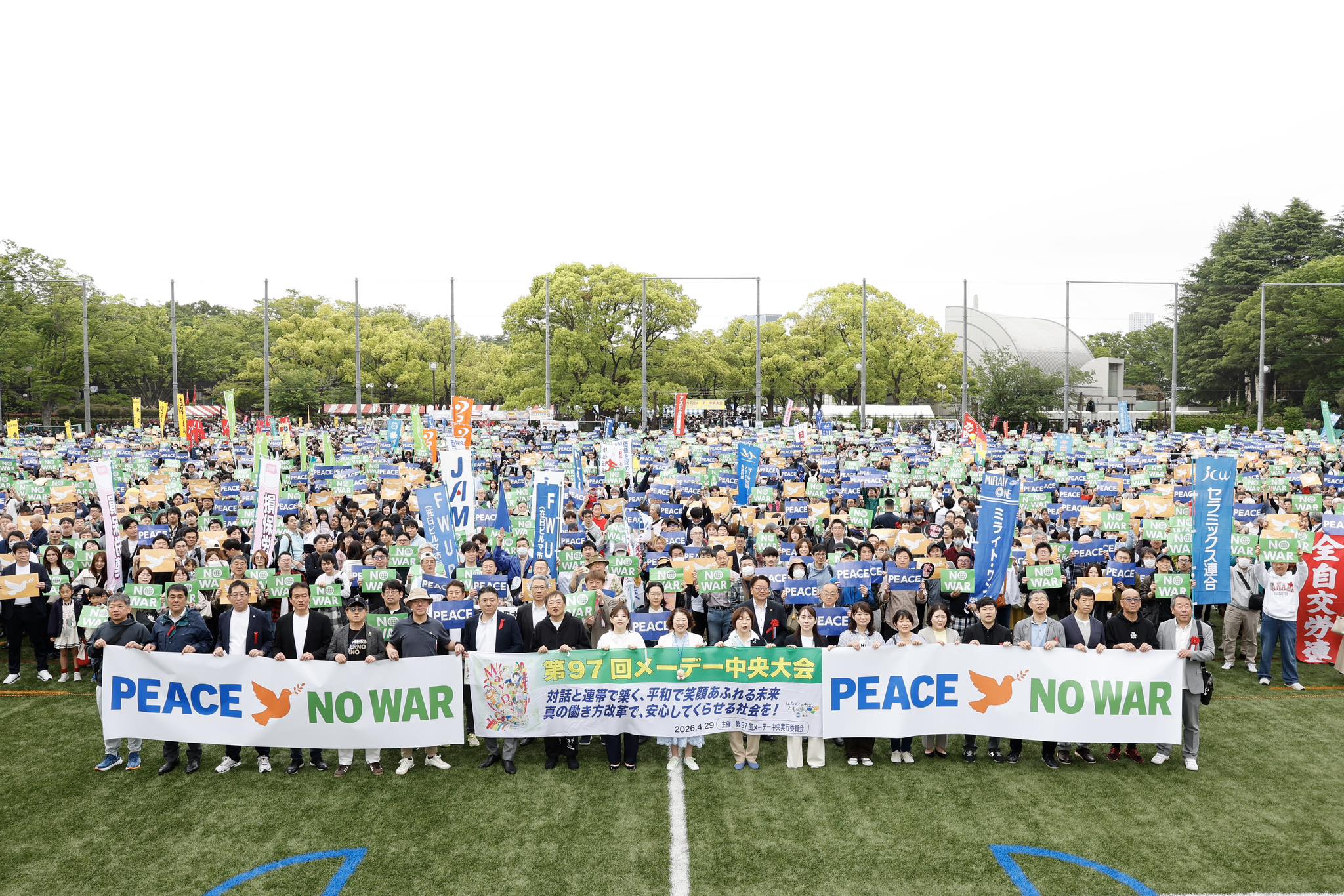
Trade unions have a vital role in turning this legal and moral rejection into political action. In the months leading to the TPNW Review Conference, unions should educate and mobilise their members, urge governments and parliamentarians to sign and ratify the TPNW, and demand that states participate constructively in the Conference — including as observers where they are not yet parties. Trade union representatives should seek inclusion in national delegations and public consultations so that the voices of working people are heard.
Unions can also review the investment of workers’ pension funds and public funds, campaign against financing companies involved in nuclear weapons production, and build alliances with Hibakusha, affected communities, peace organisations, and young people. Through workplace education, collective action, pension-fund governance, and public advocacy, we can help redirect resources from weapons towards decent work, universal social protection, healthcare, education, climate action and sustainable development.
ITUC-Asia Pacific General Secretary Shoya Yoshida said:
“Workers have never benefited from an arms race. They are among the first to lose their lives, livelihoods, and rights when conflicts erupt, and they bear the cost whenever public resources are diverted away from social needs to instruments of destruction. At a time when geopolitical tensions threaten dialogue, we must reject the belief that fear can deliver lasting peace.
“Trade unions must help build the political will needed to advance commitments to the elimination of nuclear weapons. Peace cannot be built on the threat of nuclear destruction. It must be grounded on justice, democracy, international cooperation, and respect for human dignity.”
ITUC-Asia Pacific calls on all governments—particularly those possessing nuclear weapons or sheltering under nuclear deterrence arrangements—to fulfil their NPT obligations, join the TPNW, and begin concrete, transparent, verifiable, and irreversible steps towards disarmament. All governments must work towards the delivery of an ambitious and action-oriented outcome that strengthens the Treaty and advances the complete elimination of nuclear weapons.
The elimination of nuclear weapons is not an abstract aspiration, but an urgent responsibility that demands political will and concrete action to protect humanity today and the future generations.

.jpg)







.jpg)

.png)



.png)


.png)


%20(1).png)


.jpg)


.png)


.png)


%201.svg)


