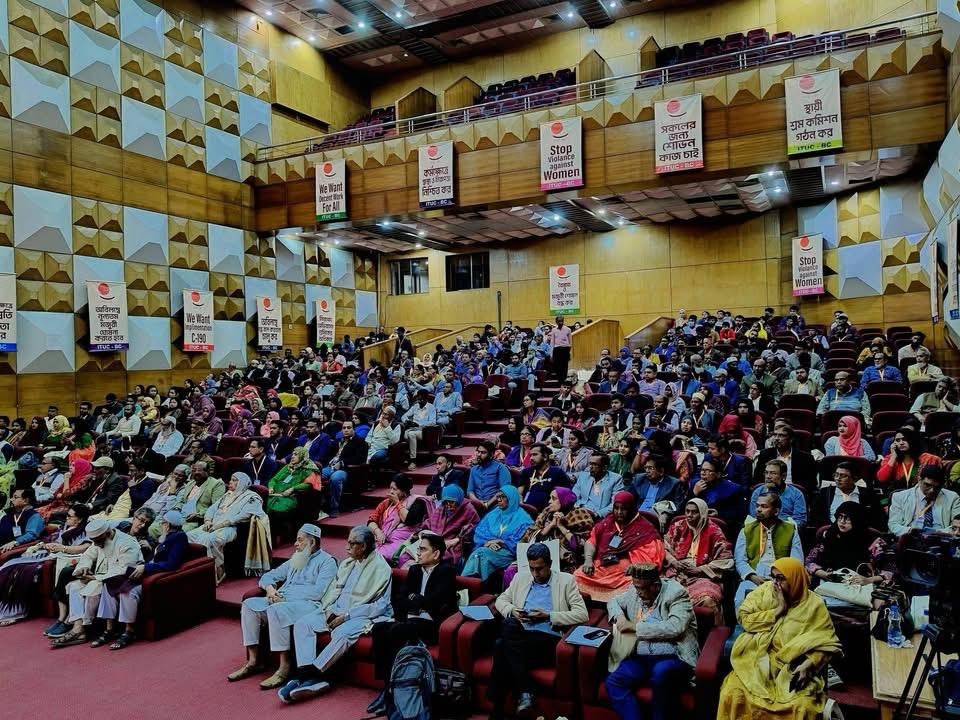
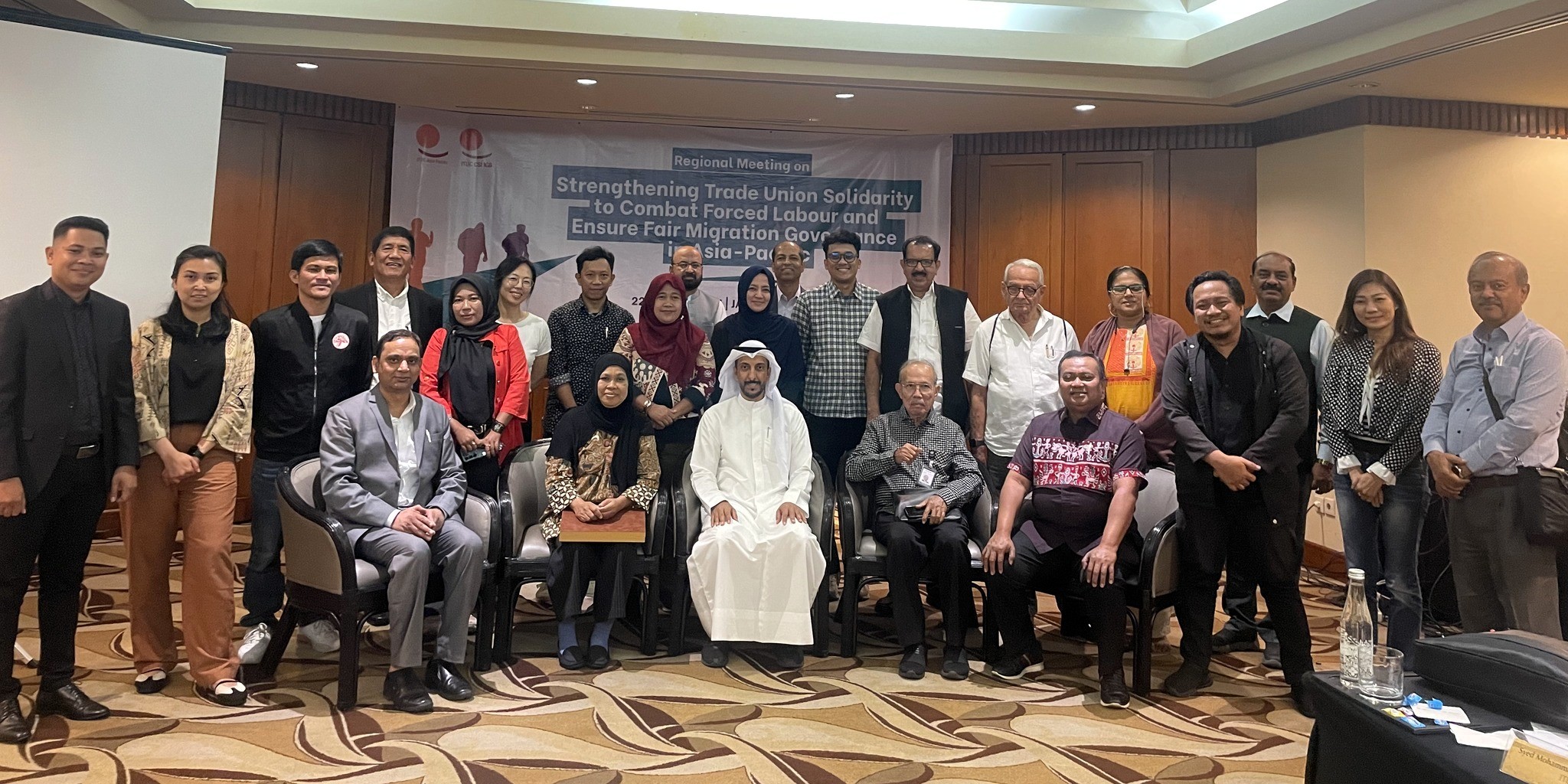
Trade unions from across Asia and the Pacific and the Arab region called for stronger cooperation between countries of origin and destination to address persistent challenges faced by migrant workers during an interregional meeting held in Kathmandu, Nepal, on 18–19 November 2026.
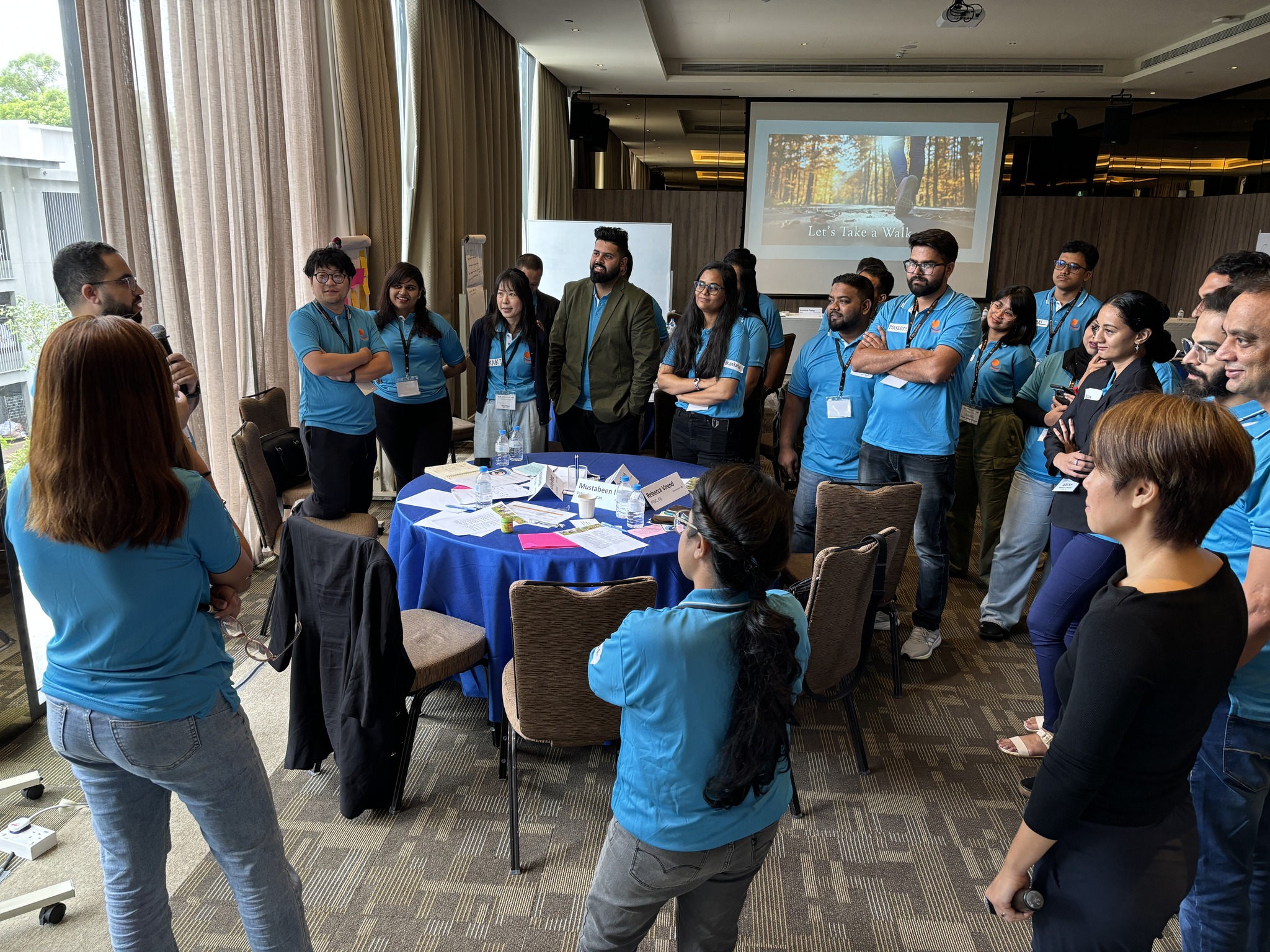
Organised by the ITUC-Asia Pacific in cooperation with the International Trade Union Confederation (ITUC) and the South Asian Regional Trade Union Council (SARTUC), the Interregional Trade Union Meeting on Advancing Fair Migration Governance, Social Protection and Decent Work brought together trade union representatives, Global Union Federations, the International Labour Organization (ILO), civil society organisations, and other stakeholders to strengthen cooperation to promote migrant workers’ rights across migration corridors.

Opening the meeting, Shoya Yoshida, General Secretary of ITUC-Asia Pacific, said:
“Migrant workers must enjoy their fundamental rights, regardless of where they work. Trade unions in countries of origin and destination have an important responsibility to work together, strengthen protection throughout the migration journey and ensure that solidarity translates into practical support for workers.”
Discussions highlighted persistent challenges faced by migrant workers, including recruitment abuses, restrictive employment arrangements, wage theft, discrimination, unsafe working conditions, and limitations on trade union rights. Participants stressed the need for stronger regulation of recruitment agencies, access to justice, and protection throughout the migration cycle, from recruitment and employment abroad to return and reintegration.
Meanwhile, representatives from the Arab Trade Union Confederation (ATUC), Fiji Trades Union Congress (FTUC) and Korean Confederation of Trade Unions (KCTU) shared experiences of changing migration patterns and the challenges facing migrant workers in different destination countries.
The meeting also examined gaps in migrant workers’ social protection, particularly difficulties in accessing benefits and transferring entitlements between countries. Trade unions emphasised the importance of simplifying claims procedures, raising awareness of entitlements, and ensuring portability of social security benefits.
Participants also assessed the implementation of the international migration commitments following the 2026 International Migration Review Forum (IMRF), underscoring the need for stronger cooperation among trade unions and other stakeholders to translate these commitments into concrete protections for migrant workers.
Participants examined the institutional role of trade unions in migration governance, fair recruitment practices, prevention of forced labour, and stronger accountability of recruitment agencies. They explored opportunities and strategies for organising migrant workers, particularly in countries where legal restrictions limit freedom of association and collective bargaining. Contributions from Global Union Federations highlighted the importance of cross-border organising, migrant support networks, and gender-responsive protection, particularly for women migrant workers and domestic and care workers.
Through five thematic working groups, participants developed proposals covering fair and ethical recruitment, social protection, decent work, the right to organise, and gender and migration.
The proposals included campaigns for zero recruitment fees, improved monitoring of recruitment agencies, stronger occupational safety and health awareness, social security portability and union-to-union cooperation. Participants also proposed establishing portable trade union membership arrangements, forming migrant worker support groups in Gulf countries, and strengthening partnerships with diaspora organisations to improve cross-border support and protection for migrant workers.
Particular attention was also given to the protection of women migrant workers, including measures to address workplace violence and harassment as well as restrictions on overseas employment.
Building on previous interregional trade union meetings in Bahrain, Jordan, and Jakarta, the Kathmandu meeting identified priorities, proposed responsibilities, and timelines extending into 2027 to guide further cooperation among trade unions in origin and destination countries.
ITUC-Asia Pacific, together with ITUC, SARTUC, national trade union organisations and Global Union Federations, will continue advancing joint actions between countries of origin and destination to strengthen migrant workers’ access to rights, protection, and decent work.